School Certificate Omission Does Not Invalidate Tinubu's Nomination — Monday Ubani
Home -
News
School Certificate Omission Does Not Invalidate Tinubu's Nomination — Monday Ubani
School Certificate Omission Does Not Invalidate Tinubu's Nomination — Monday Ubani
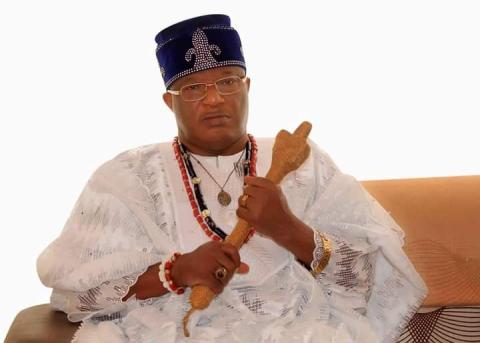
A Senior Advocate of Nigeria and constitutional lawyer, Monday Ubani, has said President Bola Ahmed Tinubu was under no constitutional obligation to submit his primary and secondary school certificates to the Independent National Electoral Commission (INEC).
He maintained that while the omission may raise questions of transparency, it does not constitute a legal breach.
Ubani made the clarification on Wednesday during an interview on Frontline, a current affairs programme on Eagle 102.5 FM, Ilese-Ijebu, following renewed public debate over Tinubu's educational credentials.
The controversy resurfaced after INEC published the credentials of presidential candidates, prompting public discussions on whether possession of a university degree alone satisfies the constitutional educational qualification for the office of the President or whether candidates must also submit their primary and secondary school certificates.
Responding to the issue, Ubani said the matter should be examined strictly within the framework of constitutional law rather than public opinion.
"It is about the law, not about maybe sentiment or bias, which I see flying about," he said.
According to the senior lawyer, Section 131 of the 1999 Constitution (as amended) requires only that a presidential candidate demonstrate that he or she has been educated up to school certificate level or its equivalent and does not expressly mandate the submission of primary or secondary school certificates.
"The Constitution says that whosoever will run for the office of the president must show that he has attained the level up to school certificate level," he said.
Ubani argued that judicial interpretation of the constitutional provision has established that candidates are not legally required to physically produce their school certificates.
"There's no legal compulsion that he must disclose his certificate or he must show it. I'll say that it's only a moral issue and it has nothing to do with legal compulsion."
He maintained that while failure to submit lower educational certificates may generate public debate over openness and accountability, it does not invalidate a candidate's nomination.
"There's no constitutional compulsion to show certificate and there is a judicial pronouncement to that effect that the Constitution does not require production of a certificate. It's just for you to show that you have been educated up to that level."
Ubani further explained that where a candidate presents a recognised university degree, the law presumes that the individual must have progressed through the lower levels of education unless credible evidence is produced to rebut that presumption.
"If somebody has a degree, the presumption is that he must have passed through primary school, secondary school, and university. So it is for you now to rebut it."
While defending the constitutional position, the SAN acknowledged that candidates seeking public office should, as a matter of transparency, disclose their educational history.
"I agree that ordinarily, whoever is submitting his credentials should have shown evidence of his primary school certificate and should have also shown evidence of his secondary school certificate. These are moral issues. These are issues of transparency."

 By Adewale Adewale